Technology
Data centers need power – lower income, rural residents pay the price
By Marcus Chen
Advertisement · Why this ad?
Katherine oversees editorial operations across all six brands. Before joining The Meridan Group, she spent 14 years at the Minneapolis Star Tribune, where she led the metro desk through its digital transformation. She holds a Master's in Journalism from Northwestern's Medill School.
More from Katherine →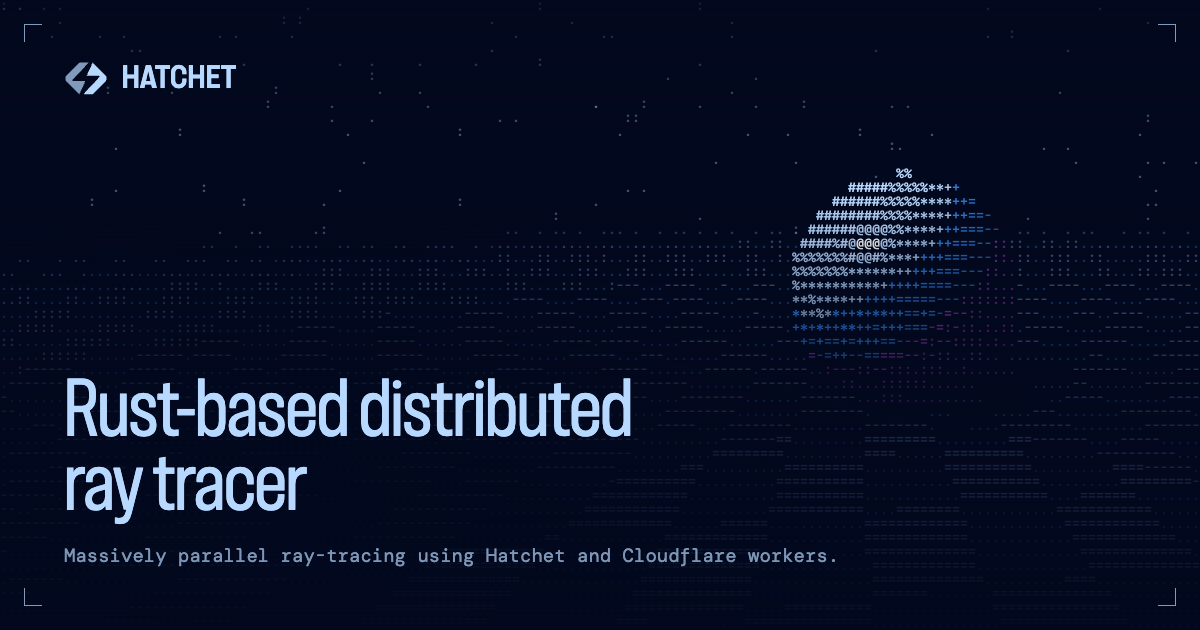
Hit render on the right Hit render below glass ball mirror ball camera 2 parts · 2 movable: click one, then move (W) or turn (E) it · 450 ms Camera view Move Turn Preview Render ▚▞ Distributed Ray Tracer What is this? + New chat ┌──┬──┬──┬──┬──┐ │▓▓│▓▓│▓▓│▒▒│░░│ ├──┼──┼──┼──┼──┤ │▓▓│▒▒│░░│ │ │ └──┴──┴──┴──┴──┘ Describe a shape to start. Then keep chatting to refine it, or edit the script directly. Model GPT-5.6 Sol GPT-5.6 Terra GPT-5.6 Luna Effort Low Medium High Extra high + Img Send Script · edited Hide Render Quality Preview HD Full HD Custom Resolution 640×360 1280×720 1920×1080 2560×1440 Samples Bounces Render Download PNG Copy image Nothing rendered yet [░░░░░░░░░░░░░░░░░░░░░░░░░░] 0% Tiles 0 / 0 · Elapsed 0.0s Hide UI Esc What is this? This demo renders images through a ray-tracing technique called Signed Distance Fields. The entire ray-traced scene is represented as code and written by a language model. Because this technique is embarrassingly parallel, each tile of the image can render simultaneously up to a very high resolution. Hatchet is used to orchestrate the parallel tiles, using Cloudflare Workers running Rust as the underlying compute (with an option to run on even larger, standalone machines if needed). The coding agent also uses Hatchet + Cloudflare and durable streams are used for passing messages back to each frontend. This was built to showcase two new Hatchet features: Serverless endpoints Durable streams Signed Distance Fields are a technique popularized by Inigo Quilez . This renderer uses a DSL based on Rhai and Fidget to define the SDFs, which you can edit yourself. This approach is uniquely suited to refining with LLMs because it represents the entire ray-traced scene as code. The renderer itself is a slightly modified version of rpt . Source on GitHub ↗ · hatchet.run ↗