
Business
From scooters to shampoo - the people saving hundreds from dumpster diving
By Marcus Chen
Advertisement · Why this ad?
Marcus manages the day-to-day editorial workflow across all brands, coordinating coverage assignments and ensuring editorial standards are met. He previously served as city editor at the Pioneer Press and holds a degree in Political Science from Carleton College.
More from Marcus →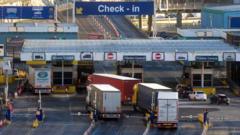
As the sun sets over the Thames, a sense of cautious optimism fills the air among London’s food exporters. After years of uncertainty and bureaucratic hurdles stemming from Brexit, the UK and EU have reached a draft agreement aimed at streamlining food exports. This pivotal deal, announced just ahead of a UK-EU summit later this month, marks a significant step in the ongoing effort to redefine post-Brexit trade relations.
The draft agreement, described as the most consequential aspect of the so-called Brexit reset, seeks to alleviate the red tape that has hampered food exports between the UK and EU since the end of the transition period. This initiative comes as both parties aim to foster a more cooperative trading environment, which has been a critical point of contention since the Brexit vote in 2016.
Under the new terms, the UK and EU will work to harmonize regulations concerning food safety and quality standards, potentially reducing the burden on exporters. This move is expected to simplify the process for British food producers, allowing them to access the lucrative EU market without the extensive paperwork that has characterized recent years.
Since the UK officially left the EU on January 31, 2020, trade relations have been fraught with complications. The introduction of customs checks and regulatory divergences led to delays and increased costs for exporters. According to the UK government, food exports to the EU dropped significantly in the months following Brexit, with many businesses struggling to navigate the new landscape.
Many exporters voiced their frustrations during this period, with some even considering alternative markets outside the EU. The challenges were not just logistical; they also threatened the very fabric of relationships built over decades between UK producers and European buyers. The draft agreement is seen as a lifeline for these businesses, offering hope of a more stable trading future.
The implications of this agreement extend far beyond the boardrooms of major corporations. Small and medium-sized enterprises (SMEs) in the food sector, which make up a significant portion of the UK’s economy, stand to benefit immensely. For example, a family-owned farm in Kent, known for its organic produce, has struggled to maintain its export contracts due to the burdensome regulations. With the new agreement, they hope to regain their footing in the European market.
“This deal could be a game-changer for us,” said Sarah Thompson, the farm’s owner. “We’ve built relationships with our European customers over the years, and it’s heartbreaking to see them slip away due to red tape.”
Moreover, the agreement is expected to create jobs in the food export sector, as companies will likely expand operations to meet renewed demand. The Food and Drink Federation estimates that a streamlined export process could lead to a 15% increase in food exports to the EU within the next year.
Local farmers and exporters are not just statistics; they are individuals with stories that reflect the broader challenges faced by the industry. Take, for instance, the case of David Johnson, who runs a fishery in Cornwall. His business has historically supplied fresh seafood to restaurants across Europe. “The delays and extra costs have been devastating for us,” he explained. “We pride ourselves on delivering fresh fish, but with the red tape, we’ve lost contracts and, more importantly, trust with our clients.” David’s experience underscores the urgency of the new agreement and the potential it holds for restoring confidence in cross-border trade.
While details of the draft agreement are still being finalized, key elements include a commitment to mutual recognition of food safety standards and a framework for resolving disputes. This mutual recognition could simplify the certification process, allowing UK producers to demonstrate compliance with EU regulations more efficiently.
Additionally, the agreement proposes a phased approach to implementing changes, giving businesses time to adapt to new requirements. This gradual rollout is crucial for smaller exporters who may not have the resources to pivot quickly.
Furthermore, the agreement includes provisions for technology sharing between the UK and EU to improve tracking of food products. This is particularly important for perishables, where maintaining quality is essential. The use of technology can enhance transparency in the supply chain, which is a growing concern among consumers who are increasingly interested in the origin and safety of their food.
As the UK and EU prepare for the upcoming summit, both sides are optimistic about finalizing the agreement. However, challenges remain. The political landscape in both regions is fluid, and any changes in leadership or policy direction could impact the trajectory of these negotiations.
Moreover, stakeholders emphasize the importance of not just reaching a deal but ensuring that it is effectively implemented. “The devil is in the details,” noted James Parker, a trade analyst at the Department of International Trade. “We need to ensure that businesses are supported throughout this transition.”
The broader community is also keenly aware of the implications of this agreement. Local councils and trade associations are working together to ensure that small businesses are informed about the changes and can take advantage of the new opportunities. Workshops and informational sessions are being planned to help exporters understand the new regulations and how to comply with them effectively.
Local government officials, such as Councillor Emily Dawson from the Borough of Islington, have expressed their support for the agreement. “This is a significant step for our local economy. We have many businesses that rely on exporting their goods, and we want to ensure they have the tools they need to succeed,” she stated.
The agreement comes at a crucial time, as the UK seeks to bolster its economy post-pandemic. By easing the export process for food products, the government aims to reinforce the agricultural sector, which is vital for the nation’s food security and economic stability.
The draft agreement between the UK and EU represents a significant step forward in addressing the challenges posed by Brexit. For food exporters, this deal could mean the difference between survival and growth in a competitive market. As both sides work to finalize the terms, the hope is that this cooperation will pave the way for a more prosperous future.
For residents and businesses in London, the potential benefits are clear: a thriving food export sector contributes not only to economic growth but also to the community’s overall well-being. As families and businesses look towards a more stable future, the importance of strong, committed relationships—both in trade and in life—remains paramount.
By Marcus Chen
By Katherine Langford

By Marcus Chen

By Katherine Langford